


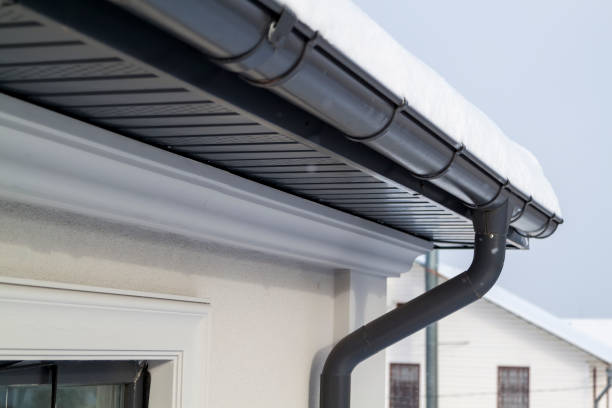
Drainage trouble is not always easy to spot by looking at the outside of a gutter. The metal may still appear straight and undamaged while problems are developing around the outlet, downspout connection, or along a low section of the run. Water can still pool, move too slowly, or overflow even when the gutter looks normal from the yard.
The Pitch May Be Too Flat
Gutter pitch is slight by design, so a problem is not always obvious just by looking at the roofline. If a section settles or was installed with too little slope, water can linger instead of moving steadily toward the outlet. Standing water after a storm is often one clue.
Poor pitch can also show up only during heavier rain. A gutter may handle a light shower but struggle when runoff arrives faster. During rain gutter installation, hangers and fascia conditions affect whether the intended slope stays consistent along the run. Even a small low section can hold enough water to leave dirt marks or encourage debris to settle.
The Outlet Can Be Partially Blocked
Leaves and larger debris are easy to notice, but smaller material can pack tightly around an outlet. Roof granules, seed pods, bits of leaves, and dirt may restrict flow without making the entire gutter look clogged. Water then collects upstream even though the visible trough appears fairly clean.
A blocked outlet can sometimes mimic a sizing problem. Before assuming the gutter is too small, a gutter company should check the opening, downspout connection, and nearby debris. Gutter guards can reduce some material entering the system, but they do not eliminate the need for inspection or maintenance. A quick look from the ground will not always reveal a restriction hidden right at the outlet.
Downspout Restrictions Can Slow the Whole Run
The trouble may be below the gutter rather than inside it. Debris can lodge in a downspout elbow or at a joint where it cannot be seen from above. A crushed or shifted section can also reduce flow and cause water to back up toward the gutter.
Downspout placement matters as well. Water needs a clear path from the outlet through the vertical section and out to the discharge point. A rain gutter installation should account for elbows, straps, extensions, and the area where runoff finally exits near the ground. If one of those parts is misaligned or restricted, the gutter above may overflow even though the trough itself is clear.
Low Spots Can Form Between Hangers
A gutter can look straight from a distance while still having a small low section between supports. Loose hangers, weakened fascia, debris weight, or gradual movement can allow one part of the run to dip. Water collects there and may never reach the outlet completely.
Repeated ponding can leave dirt lines or organic residue inside the gutter. Sagging does not always mean the whole system needs replacement. Sometimes the cause is localized support failure, but the fascia board and surrounding fasteners should be checked before deciding on the repair. Correcting the support without checking the underlying wood may only solve the problem temporarily.
Roof Valleys Can Overload One Small Area
Roof runoff does not always enter a gutter evenly. Valleys can send a concentrated stream toward one section, especially during thunderstorms or heavy rain. The rest of the gutter may drain normally while water overshoots or piles up near that point.
That pattern can make an otherwise sound system appear undersized. In some cases, gutter placement, outlet location, local debris, or downspout capacity may be contributing factors. Anyone comparing gutter companies near me should ask whether the contractor is looking at where roof runoff actually enters the system instead of judging gutter size alone. Watching the system during rain can reveal behavior that is easy to miss during a dry inspection.
The Discharge Point May Send Water Back Toward the House
A gutter can carry water correctly from the roof and still leave a drainage problem at ground level. A short downspout, misplaced splash block, or disconnected extension may release water too close to siding, walkways, landscaping, or the foundation area.
Grading and site drainage also affect where that water goes next. Moisture near the foundation is not automatically caused by the gutter system, but the downspout discharge is worth checking. Water should have a reasonable route away from the structure rather than collecting beside the wall. Puddling near the end of a downspout may point to a discharge problem even if the gutter run is draining as intended.
A Closer Inspection Can Reveal What the Ground View Misses
Some gutter problems only become clear during rain or from a closer inspection at the eaves. Checking pitch, outlets, hangers, fascia, seams, downspouts, and discharge points can help separate a simple maintenance issue from a larger installation or repair concern.
For property owners, Apollo Roofing provides residential gutter repair, replacement, cleaning, maintenance, and gutter installation, along with roofing services. A local contractor with experience in both roof drainage and roofline conditions can be useful when the source of poor drainage is not obvious from the yard.

