


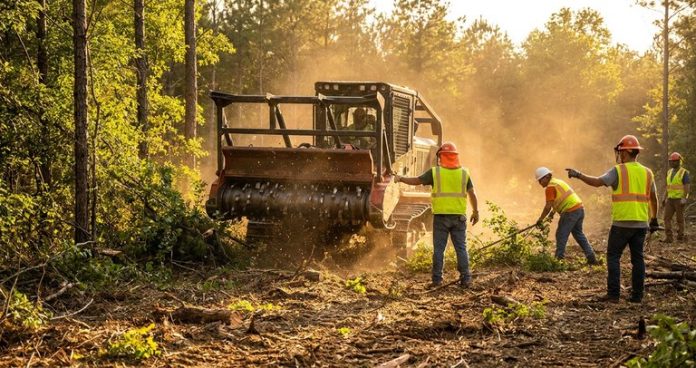
A new driveway needs a solid foundation long before gravel, asphalt, or concrete reaches the property. Trees, buried roots, uneven ground, and soft soil can all cause problems if contractors build directly over them. Professional land clearing services prepare the site for grading and construction, helping prevent settling, drainage issues, and damage to the finished driveway.
Finding the Best Route Before Clearing Begins
Driveway placement affects how easily vehicles enter the property and how much ground preparation the project requires. Contractors examine slopes, existing trees, drainage paths, and the distance between the road and the intended parking area. A shorter route may look practical but require extensive excavation or removal of large trees. An alternative path might follow the natural terrain and need less grading. Road visibility, turning space, and local driveway entrance requirements also influence the layout. Planning these details early prevents unnecessary clearing and expensive changes later.
Why Does the Ground Need More Than Brush Removal?
Cutting down grass and shrubs creates access, but it does not leave a suitable surface for driveway construction. Stumps, buried branches, and thick roots can interfere with excavation and grading.
Crews performing land clearing services remove vegetation from the designated driveway area and address organic material that could decay beneath the surface. Depending on the site, workers may grind or excavate stumps and remove root systems within the construction footprint. Clearing limits should also account for room to operate equipment safely.
Removing Topsoil Before Building the Driveway Base
Topsoil supports plant growth, but its organic content and variable composition make it unsuitable as the main supporting layer beneath a driveway. Contractors usually strip this material to reach more stable subgrade soil. The required excavation depth depends on the ground conditions and proposed pavement structure. Property owners comparing land clearing services near me should ask whether excavation and topsoil removal are included in the project. Suitable topsoil can sometimes be stockpiled for later landscaping, provided crews keep it separate from unsuitable fill and construction debris.
Dealing With Soft Ground and Hidden Low Spots
Once vegetation disappears, contractors may discover wet pockets, old drainage channels, or loose fill that cannot support repeated vehicle traffic. Covering these areas with gravel alone may lead to rutting and settlement.
A proper assessment determines whether unstable material needs removal, additional compaction, or another form of stabilization. Geotextile fabric can help separate aggregate from weak soil in suitable applications, but it cannot replace necessary ground preparation. Excavation depth and reinforcement depend on expected vehicle loads and actual site conditions.
Getting the Slope Right for Vehicle Access
Driveways need enough slope to shed rainwater without becoming uncomfortable or unsafe for vehicles. Excessively steep entrances can cause vehicles to scrape, while flat areas may hold water and weaken the base. Grading equipment shapes the route and creates smooth transitions between the road, driveway, and parking surface. Contractors also consider turning areas, garage elevations, and surrounding ground levels. Property owners should confirm the planned slope before construction because correcting major elevation problems after paving can require substantial removal and rebuilding.
Where Should Rainwater Go After Clearing?
Clearing vegetation changes how stormwater travels across a property. Rain that once slowed through grass and brush may move faster over exposed soil and compacted driveway surfaces.
Drainage planning may involve roadside culverts, shallow ditches, or grading that directs water away from structures. Culvert size and placement should follow local requirements and expected runoff conditions. Contractors must also protect downstream areas from concentrated discharge. Installing drainage components before the finished driveway surface helps avoid reopening completed sections.
Preparing a Firm Base for the Finished Driveway
After clearing and major grading, crews prepare the subgrade for the driveway’s intended surface. Compaction reduces unwanted movement, while aggregate base layers provide support and help distribute vehicle loads. Material thickness depends on soil strength, drainage conditions, and whether the driveway will carry passenger vehicles or heavier equipment. Gravel driveways also need suitable aggregate grading to resist rutting and displacement. Asphalt and concrete installations have different structural requirements, so contractors should match the ground preparation to the selected pavement system rather than using the same base for every project.
Checking What Land Clearing Contractors Include
Landowners searching for land clearing companies near me should examine the full scope of work instead of comparing clearing prices alone. One estimate may cover vegetation removal, while another includes stump excavation, grading, and debris hauling.
Questions about utility marking, disposal methods, equipment access, and drainage responsibilities help prevent misunderstandings. Written estimates should identify which contractor prepares the subgrade and which handles the finished driveway surface.
For driveway projects, Woods Landscaping & Dirt Work LLC offers services that help prepare properties for construction. The company handles vegetation removal, excavation, grading, and gravel driveway work, addressing ground conditions that can affect the stability and drainage of a new driveway. Property owners dealing with wooded lots, uneven surfaces, or areas that need extensive preparation can turn to the company for help getting the site ready for installation.

