


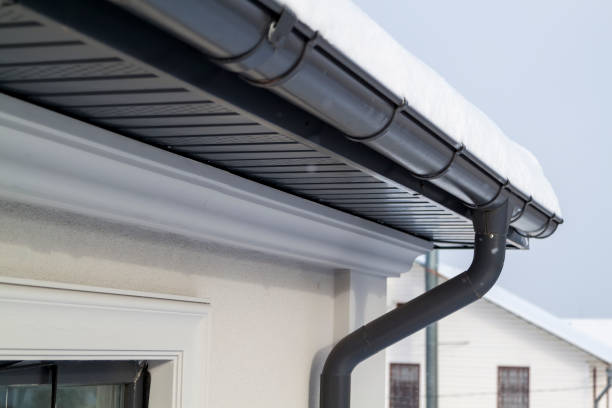
At first glance, a gutter can look perfectly healthy. It may be securely attached to the house, free from obvious cracks, and even appear clean. But appearance does not always tell the full story. A gutter can look fine from the ground while still allowing water to pool, overflow, or drain too slowly.
This is particularly important for homeowners looking for reliable gutters Huntsville AL. Proper drainage depends on more than having a gutter installed along the edge of the roof. The system needs the correct slope, clear downspouts, adequate capacity, and secure installation to move rainwater away from the home.
The Gutter May Not Have the Right Slope
One of the most common hidden drainage problems is incorrect gutter pitch.
Gutters are not supposed to be perfectly level. They need a slight slope toward the downspout so gravity can move water through the channel. A commonly used guideline is approximately ¼ inch of drop for every 10 feet of gutter run.
The slope is subtle, so you may not notice a problem simply by looking at the gutter. However, even a small low spot can allow water to remain trapped after rainfall.
Over time, standing water adds weight to the gutter and can contribute to sagging, debris accumulation, and additional drainage problems.
A Hidden Downspout Clog Can Stop the Entire System
Your gutter itself may be completely clean while the downspout is partially or completely blocked.
Leaves, roof debris, sediment, and other material can collect around the gutter outlet or inside the downspout. Because much of the downspout is enclosed, the obstruction may not be visible during a normal inspection.
A common sign is water remaining in the gutter or overflowing near the downspout during rainfall. If water does not exit freely from the bottom of the downspout, a blockage may be restricting the system.
This is why checking the entire drainage path is important rather than simply removing visible leaves from the gutter.
Sagging Gutters Can Create Low Spots
A gutter can gradually change shape even if it was originally installed correctly.
Loose hangers, damaged fascia, accumulated debris, and the weight of standing water can cause sections of the gutter to sag. Once a section drops, it can create a low point where water collects instead of moving toward the downspout.
From the ground, the gutter may still look relatively straight. During or after a storm, however, the low spot becomes much more obvious because water begins to pool or overflow from that area.
A sagging gutter can therefore become a cycle: poor drainage creates standing water, standing water adds weight, and additional weight can make the sag worse.
The Gutter May Be Clean but Too Small for the Water Volume
Cleaning does not automatically solve every drainage problem.
During a strong storm, a large amount of water can flow from the roof into the gutter system in a short period. If the gutter or downspout configuration cannot handle the volume, water may overflow even though there are no obvious blockages.
The roof area, gutter dimensions, number and placement of downspouts, and local rainfall conditions all play a role in drainage performance.
If overflow happens primarily during intense rain while the system appears clean and properly sloped, capacity may need to be considered rather than assuming the problem is simply dirt or leaves.
Water Can Also Be Draining Behind the Gutter
Not every drainage problem appears as water spilling over the front edge.
If water is running behind the gutter and down the fascia, the issue may involve the roof edge, drip edge, or gutter positioning. In this situation, the gutter can appear to be working normally from the front while water is actually reaching areas that should remain protected.
Water repeatedly contacting the fascia can contribute to moisture damage over time. That makes it important to inspect where the water is traveling, not just whether the gutter itself looks clean.
Why Huntsville Homeowners Should Pay Attention to Gutter Drainage
A gutter system has an important job: collecting roof runoff and directing it away from the home’s walls and foundation.
When drainage is poor, water may overflow near landscaping, collect against the foundation, or run down exterior surfaces. Effective roof drainage helps prevent runoff from being directed toward the foundation.
For homeowners considering gutters Huntsville AL, choosing the right system and ensuring it is correctly installed can be just as important as the appearance of the gutters themselves.
How to Tell If Your Gutters Are Not Draining Properly
Watch your gutters during and after a rainfall. Some warning signs include:
- Water remaining in the gutter after the rain stops
- Overflow occurring from one particular section
- Water spilling near a downspout
- Visible sagging or low spots
- Water running behind the gutter
- Little or no water coming from the downspout outlet
- Soil erosion or pooling near the home’s foundation
- Frequent gutter clogs despite regular cleaning
These symptoms can point to different underlying problems, so it is useful to inspect the complete system rather than focusing on only one section.
Professional Gutter Inspection Can Find Hidden Problems
A gutter does not have to look damaged to have a drainage problem. Incorrect pitch, hidden clogs, loose hangers, low spots, inadequate downspouts, and water-management issues can all affect performance.
If your gutters repeatedly overflow or retain water, having the system inspected can help identify the actual cause before a minor drainage issue develops into a larger problem.
For homeowners searching for gutters Huntsville AL, the goal should not simply be a gutter system that looks good from the street. The system should also move rainwater efficiently and direct it safely away from the home.
A properly functioning gutter may be easy to overlook—and that is exactly what you want. When rain arrives, the water should have a clear path from the roof, through the gutter, down the downspout, and away from the foundation.

