


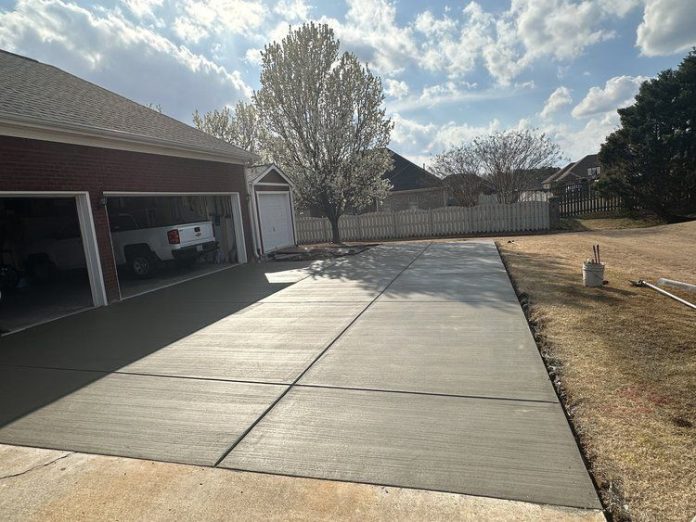
A good concrete job starts long before trucks arrive on-site. Contractors must understand how the surface will be used, what stresses it will face, and how the environment in Huntsville AL will influence its long-term performance. Looking into how concrete contractors near me determine the correct PSI mix reveals a careful blend of engineering principles and situational judgment.
The Role of Load Requirements in Selecting Concrete Strength
Load requirements shape the foundation of PSI choices. Contractors assess how much weight the concrete will need to support—whether it is a driveway built for family vehicles, a parking area expected to hold heavier loads, or a patio designed for steady foot traffic. Load calculations help determine whether a standard residential mix is enough or if a more robust PSI is needed to prevent premature cracking.
Another layer of evaluation includes dynamic stress. Moving vehicles, turning tires, and repeated impact loads require mixes with added strength to resist pressure that grows over time. Concrete contractors in Huntsville AL consider these stress patterns to ensure that the slab remains stable under real-world use.
How Soil Conditions Influence the PSI Needed for Durability
Soil beneath a slab contributes significantly to its overall performance. Clay-heavy soil common around Huntsville AL expands and contracts with moisture changes, creating movement that transfers directly into the concrete. Poor soil stability often leads contractors to choose a higher PSI mix to counteract these shifting conditions.
Drainage patterns, moisture retention, and compaction levels also factor into PSI decisions. Cement contractors near me may recommend adjustments if the soil lacks proper load-bearing strength or shows signs of high moisture content. A stronger mix helps compensate for weaker subgrade performance, ensuring the slab can handle unpredictable ground movement.
The Impact of Slab Thickness on Required Concrete PSI
Slab thickness works hand in hand with PSI strength. Thicker slabs naturally distribute pressure more evenly, allowing slightly lower PSI mixes to perform reliably. However, thinner slabs require higher PSI to prevent flexing and cracking under routine conditions.
Contractors often evaluate thickness based on both function and budget. Adjusting PSI becomes a practical solution when increasing slab thickness is not feasible. Residential concrete contractors near me frequently balance these considerations to create a durable structure that meets the customer’s needs without unnecessary material use.
How Reinforcement Plans Change Strength Expectations
Reinforcement such as rebar and wire mesh changes the strength equation. These elements help concrete withstand tension forces, allowing contractors to modify PSI expectations based on how reinforced the structure will be. Reinforcement prevents crack spread and improves the slab’s ability to absorb pressure.
The spacing, placement, and quantity of reinforcement influence PSI selection as well. A project with extensive reinforcement may not require the highest PSI mix, while a minimally reinforced slab often needs a stronger mix to compensate. Concrete companies near me evaluate reinforcement plans early to match PSI with structural requirements.
Why Finish Use and Traffic Levels Shape Mix Choices
Traffic intensity plays a major role in PSI selection. Surfaces meant for light use, such as garden walkways, do not require the same strength as driveways or commercial pads. Contractors tailor PSI to match the expected wear patterns, ensuring the concrete does not deteriorate faster than intended.
Surface finish also matters. Decorative finishes, broom textures, and stamped surfaces each interact differently with environmental stresses. Concrete companies in Huntsville AL factor these finishes into PSI decisions, choosing mixes that balance durability with appearance and surface performance.
How Contractor Experience Guides PSI Selection Accuracy
Experienced contractors draw on years of field knowledge to fine-tune PSI recommendations. They understand how local climate, freeze-thaw cycles, and humidity patterns affect concrete performance. This familiarity helps them anticipate conditions that might not be obvious to homeowners. Local experience is equally valuable in predicting long-term behavior. Contractors who regularly perform concrete repair near me often learn which PSI mixes fail prematurely and which combinations stand up best to local stressors. Their insight helps avoid costly maintenance caused by underperforming mixtures.
Influence of Curing Practices on Final Concrete Strength
Curing practices determine whether the concrete reaches its intended PSI rating. Even the strongest mix underperforms if it dries too quickly or loses moisture unevenly. Contractors plan the curing process carefully, using methods such as controlled watering, curing blankets, or sealants to protect the slab during its early stages.
Environmental conditions influence curing effectiveness. Hot days, wind exposure, and rapid temperature shifts require contractors to adjust timing and techniques. Residential concrete contractors near me emphasize that proper curing is as important as the PSI rating itself, since poor curing prevents concrete from reaching full strength.
Reasons Project Specifications from Architects Affect PSI Targets
Architectural plans often include precise PSI requirements that align with regional codes, engineering assumptions, and intended use. These specifications ensure structural consistency across all project components, especially in large developments or reinforced structures. Contractors review these details to match mixes to design intent. In many cases, specifications also account for long-term operational needs, expansion plans, or compatibility with adjacent structures. Concrete contractors near me follow these guidelines to maintain compliance and avoid conflicts with inspection standards. Legacy Outdoor Services offers concrete installation and guidance tailored to PSI requirements for durable, long-lasting surfaces.

