


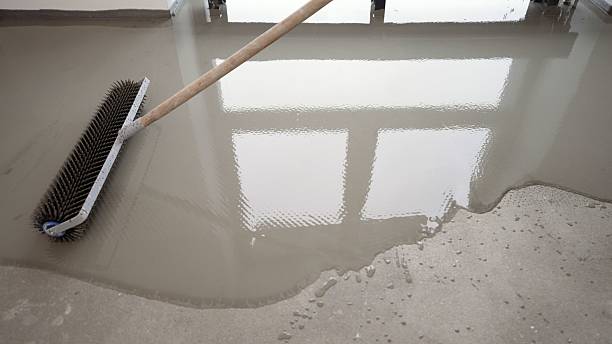
A smooth concrete floor can hide a weak surface layer that creates trouble for coatings later. Laitance forms near the top of concrete and may prevent epoxy flooring from bonding to the stronger material underneath. Removing it before installation helps reduce peeling, flaking, and premature coating failure.
What Exactly Is Concrete Laitance?
Laitance is a thin layer made from cement particles, water, and fine material that rises toward the surface as concrete is placed and finished. Once dry, it may look solid even though it has much less strength than the main slab.
Unlike sound concrete, this upper layer can be dusty, chalky, or easy to scratch. Its thickness varies with the concrete mix, finishing method, water content, and curing conditions. Epoxy floor companies inspect for these differences because appearance alone does not show whether the surface can support a coating.
Why Epoxy Can Peel Away From a Laitance-Covered Slab
Epoxy needs direct contact with stable concrete. If resin bonds to laitance instead, the coating may hold firmly to the weak layer while that layer separates from the slab itself. The failure can look like poor epoxy adhesion even though the real break happened inside the concrete surface. Tire movement, rolling equipment, and impact can speed up that separation. Homeowners searching for an epoxy garage floor near me may notice loose sections around parking paths first because warm tires place repeated stress on the same areas.
How Installers Find Weak Surface Material Before Coating
A close inspection often reveals powder, uneven hardness, or areas that scratch more easily than nearby concrete. Grinding can expose the problem more clearly as weak cement paste comes off faster than the stronger material below. Professionals also pay attention to the dust created during preparation. Excessive fine powder may suggest that the upper surface lacks strength. Contractors comparing conditions across large commercial epoxy flooring projects may find one concrete pour behaves differently from another, even within the same building. Those changes can affect tooling, grinding depth, and primer use.
Mechanical Preparation Removes the Weak Layer
Diamond grinding and shot blasting are common ways to remove laitance. Both methods cut through weak material and expose stronger concrete while creating a surface profile that allows resin to grip more effectively. Proper preparation has to continue until stable concrete is reached. One quick pass may roughen the top without removing all weak material. People comparing epoxy floors near me should ask how the installer determines when grinding is complete instead of assuming any visible scratch pattern means the floor is ready.
Laitance Also Changes How Primer Behaves
Primer is designed to enter open concrete pores and establish the first resin bond. A dusty or fragile surface can absorb primer unevenly and prevent it from reaching stronger material underneath.
Heavy absorption can sometimes make a weak slab look properly sealed at first. Later, however, the coating may detach with powdery concrete stuck to its underside. That failure pattern often shows that the bond was stronger than the laitance itself.
Experienced crews watch how primer wets the floor. Sections that absorb resin unusually fast or remain dusty after preparation may need more grinding before the system continues. Property managers looking for epoxy flooring near me should expect installers to correct the substrate rather than trying to solve weak concrete by adding extra primer.
Surface Strength Matters as Much as Surface Roughness
A rough floor is not automatically a good coating surface. Texture improves mechanical grip, but the concrete forming that texture still needs enough strength to carry the coating and the traffic above it.
Soft concrete can continue breaking down beneath a properly mixed system. Warehouses and production spaces face greater risk because forklifts, carts, and machinery place concentrated loads on commercial epoxy flooring. Testing, inspection, and controlled preparation help determine whether damaged areas need repair or removal before coating begins.
Good Preparation Prevents a Hidden Weak Link
Laitance disappears once a finished coating covers the floor, which makes preparation easy to overlook from the customer’s point of view. Yet this thin layer can determine whether the entire system stays attached for years or begins lifting under normal use.
Careful contractors treat the concrete as part of the flooring system rather than simply as a surface to cover. Grinding depth, dust removal, repairs, primer selection, and moisture conditions all affect the bond that follows. Elite Coastal Epoxy works with residential and commercial concrete surfaces that need proper preparation before coating begins. Their team can identify weak laitance, remove unstable surface material, prepare the slab to the right profile, and apply an epoxy flooring system designed to bond to sound concrete rather than a fragile top layer. That approach helps reduce the risk of peeling, flaking, and early coating failure.

