


Modular construction relies on coordination between factory production and preparation of the building site. While structural components are manufactured under controlled conditions, contractors must complete the foundations and arrange access for delivery vehicles. Any discrepancy between the finished foundation and the dimensions of the prefabricated structure can complicate assembly, increase costs and undermine the time-saving advantages of modular building methods.
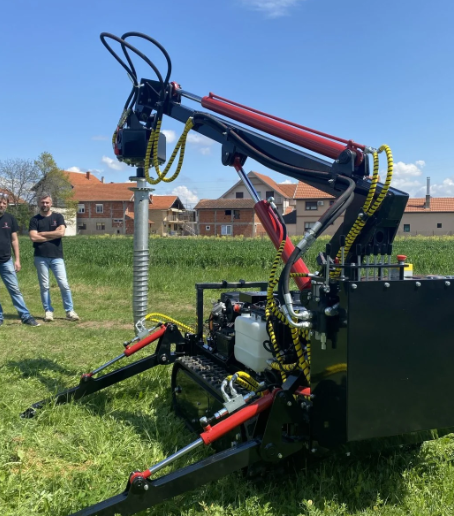
Ground screw foundations can simplify site preparation for certain types of modular structures, provided that soil conditions and structural requirements support their use. Their installation requires suitable machinery capable of delivering controlled rotational force. Equipment such as a ground screw anchor driver from Iron Mechanics allows contractors to mechanise this process and organise foundation work around the anticipated delivery date of prefabricated components.
Preparing foundations for factory-built structures
Unlike conventional construction, where structural elements are assembled gradually on site, modular buildings arrive with many of their dimensions already fixed. Foundation supports must correspond closely to the positions specified in the building design. Errors that might be corrected during conventional construction can present more complicated problems when dealing with factory-built modules.
Ground screws offer flexibility in foundation layout because individual supports can be positioned according to the structural requirements of the building. Their arrangement must account for load distribution, connection details and the characteristics of the underlying soil.
Before foundation installation begins, the contractor needs accurate drawings showing the location and required elevation of each support. These drawings should be coordinated with the module manufacturer’s specifications. Changes to the building design must be communicated promptly to the installation team, particularly if they affect the distribution of structural loads.
Surveying and verification of completed foundation positions help prevent discrepancies during subsequent assembly.
Integrating foundation work into the construction schedule
One of the commercial advantages of modular construction is the possibility of carrying out factory production and site preparation simultaneously. However, this approach depends on reliable scheduling. A delay in foundation installation may leave completed modules occupying valuable factory space or require changes to expensive transport arrangements.
Ground screw installation generally avoids the curing period associated with conventional cast-in-place concrete foundations. Where the specified system permits immediate loading following inspection and acceptance, contractors can proceed with subsequent construction activities without waiting for concrete to develop the required strength.
Effective coordination between the parties involved in modular construction should address several practical requirements:
- Completion of ground investigations before foundation design.
- Confirmation of structural loads and module connection details.
- Selection of installation equipment compatible with the specified ground screws.
- Accurate scheduling of foundation work and module deliveries.
- Verification of completed supports before building assembly.
Allowing sufficient time for unexpected ground conditions and corrective work is equally important. An installation programme that leaves no contingency can expose the entire project to unnecessary financial risks.
Selecting machinery for different project scales
Modular construction encompasses a wide range of structures, from individual garden offices to commercial buildings comprising multiple prefabricated units. The equipment required to install their foundations can vary considerably.
Portable hydraulic drivers may offer sufficient capacity for smaller projects with favourable ground conditions. Larger developments involving numerous supports may benefit from self-propelled equipment or hydraulic attachments mounted on compatible construction machinery.
Installation contractors should assess equipment performance in relation to ground screw dimensions, anticipated soil resistance and site accessibility. Maximum available torque is only one part of this assessment. Machinery stability, handling arrangements and the ability to maintain accurate alignment also influence the quality and efficiency of installation.
The availability of suitable adapters is another practical consideration. Contractors working with different modular building manufacturers may encounter foundation systems with varying connection details and installation requirements.
Recognising the engineering limitations
Ground screws should not be regarded as a universal foundation solution for modular construction. Sites containing uncontrolled fill, substantial underground obstructions or weak soil layers may require alternative foundation systems or additional engineering measures.
Structural calculations must consider vertical loads, lateral forces and resistance to uplift where relevant. Lightweight modular buildings can be particularly sensitive to wind loading, making the design of foundation connections an important aspect of structural safety.
The durability of steel foundation elements also depends on environmental conditions. Soil composition, moisture levels and potential corrosion risks should be assessed against the intended service life of the building.
Successful integration of ground screw foundations into modular construction requires cooperation between structural engineers, building manufacturers and installation contractors. When the foundation system is supported by appropriate engineering assessments and installed using suitable machinery, it can contribute to a shorter, more predictable construction programme while reducing the amount of work required on site.

